When comparing a transmission line vs distribution line, the core difference lies in voltage level, distance, and role: in short, transmission lines move large amounts of electrical power over long distances from generation sources to high-voltage substations, while distribution lines carry power from substations to end users in specific service areas.
Both systems belong to the same power grid, yet they differ in function, distance, infrastructure, and the organizations that operate them.
Before electricity reaches industrial plants, commercial buildings, or homes, it moves through distinct stages:
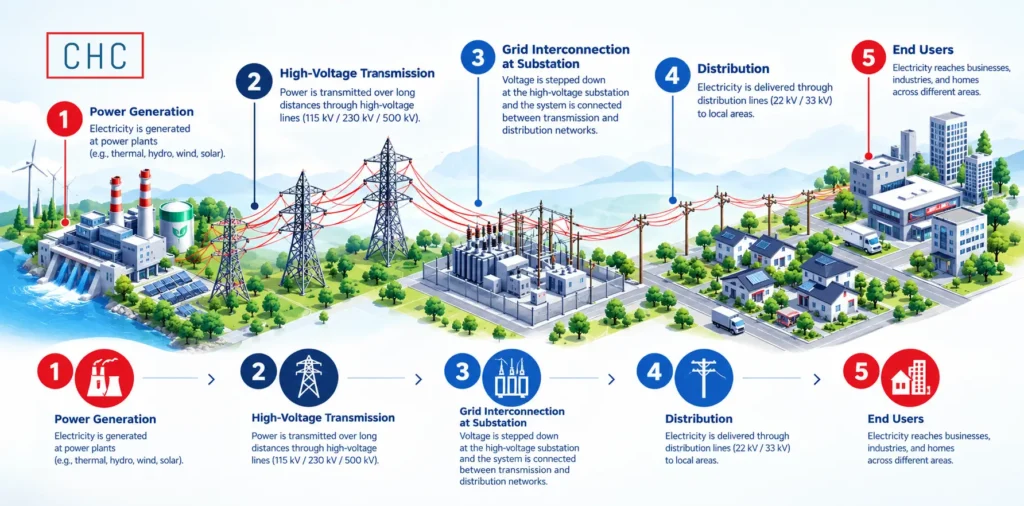
Transmitting power at high voltage over long distances lowers electrical current for a given power level, which reduces line losses. Near consumption areas, voltage is stepped down in stages so power can be distributed safely and efficiently. High-voltage substations act as key interconnection points between transmission and distribution networks to support grid stability and reliability.
What Is a High-Voltage Transmission Line?
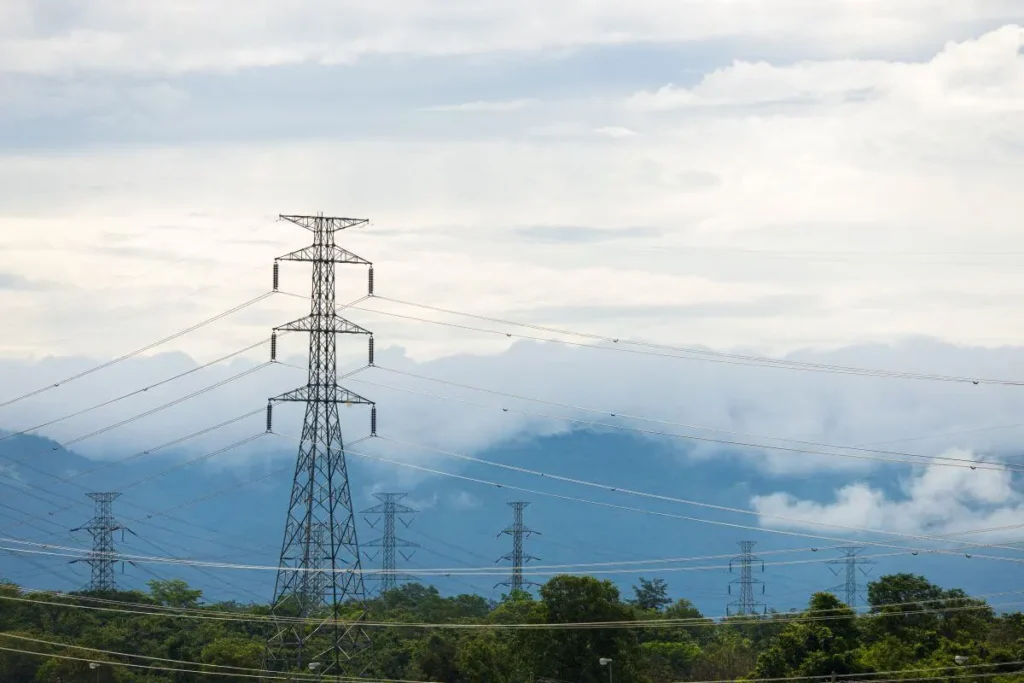
A high-voltage transmission line transfers bulk electrical power from power plants to high-voltage substations closer to demand centers. In Thailand, common transmission voltage levels are 115 kV, 230 kV, and 500 kV.
Higher voltages require larger supporting structures, insulators, and conductors, along with greater electrical clearances to handle higher loads and longer distances.
Key Characteristics of Transmission Lines
- Long-Distance Routing: Lines often span multiple districts and provinces, requiring strict management of Right-of-Way (ROW) and safety clearances.
- Heavy Supporting Structures: Transmission systems at 115 kV and above typically use steel lattice towers or steel poles, selected based on voltage, circuit count, and site conditions.
- Conductors and Ground/Communication Wires: Common conductors include Aluminum Conductor Steel Reinforced (ACSR) and All Aluminum Alloy Conductor (AAAC). Optical Ground Wire (OPGW) is often installed at the top of towers for lightning protection and grid communication.
- Project Examples: Examples include the 115 kV Buriram–Prakhon Chai Transmission Line Project and the cross-border 500 kV Luang Prabang Hydropower Project Transmission Line.
What Is an Electrical Distribution Line?
An electrical distribution line receives power from substations and delivers it to urban areas, communities, rural zones, and industrial estates. Common distribution voltage levels are 22 kV, 33 kV, and 69 kV, installed as overhead lines or underground cables depending on site conditions and project scope.
Key Characteristics of Distribution Lines
- Shorter Reach: Distribution lines cover shorter distances than transmission lines, focusing on local delivery to consumption points.
- Closer to Communities and Facilities Underground cables are often used in dense urban areas to keep streetscapes tidy and limit local impact, while overhead lines are common in rural areas and industrial estates.
How Transmission and Distribution Connect Through Substations
Transmission and distribution networks work together through substations. Equipped with power transformers, substations step voltage down from transmission levels to distribution levels while providing switching, protection, monitoring, and power flow control.
Through this coordinated setup, electricity moves reliably from generation sources through regional service areas to end users.
Consult the CHC Engineering Team
If your project involves transmission lines or distribution systems, speak with the engineering team at CHC Engineering to review your requirements and scope of work.
📞 Tel: 02-248-8130 | 02-248-8131 | 02-248-8132
✉️ Email: bidding@chcengineering.com
🌐 Website: https://chcengineering.com/
🔵 Facebook: CHC Engineering